The Feeling That the Time for Doing Something Has Passed is a 2023 comedy-drama, directed and written by Joanna Arnow and starring Arnow, Scott Cohen and Babak Tafti. IMDB
Ann, a thirty-something woman in New York City, seeks relief from the difficulties with her job and family through submission to various men.
Gaitskill herself has described the film as “the Pretty Woman version of my story.” (Gaitskill, Mary. “Victims and Losers: A Love Story; Thoughts on the Movie Secretary” Somebody With a Little Hammer: Essays, Pantheon Books: New York, 2017) Last year, the New Yorker magazine published (March 27, 2023) Gaitskill’s follow-up story “Minority Report”. It tells the story of Debby and her life after her encounter with “the lawyer,” now given the name of Ned Johnson.
“Minority Report” is less a sequel than a retelling of the same event from Debby’s changed perspective as a woman in her 50s, and her difficulty in understanding and expressing her experience. The title explicitly comes from the Steven Spielberg film of the same name, in which precognitive people experience flashes of future events while kept in a sedated state, and a team of detectives have to interpret these scattered, impressionistic glimpses of possible crimes and decide what to do.
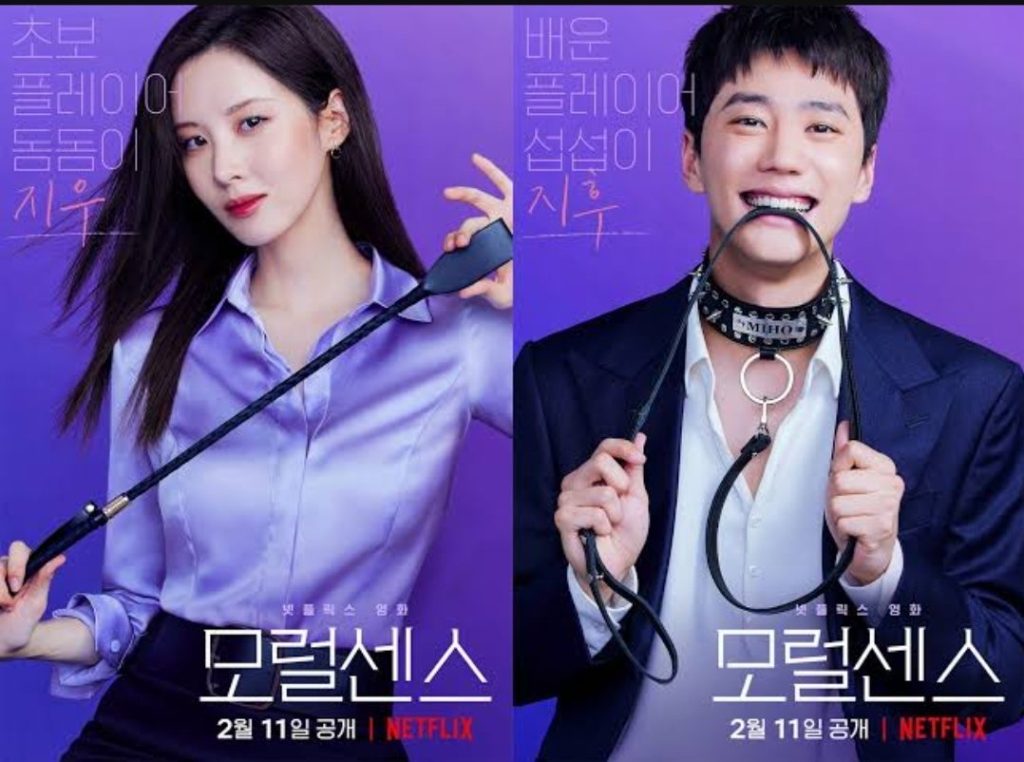
Love and Leashes is a 2022 Korean romantic comedy, currently streaming on Netflix, about two office workers who begin a dominant/submissive relationship, based on a webcomic.
Note: I do not speak Korean, and I’m going entirely by the dubbing and subtitles. There are likely many cultural and linguistic nuances I am missing. E.g. “Master” is frequently used, but not “Mistress”.
Jung Jihoo transfers to the public relations department of a corporation, where he meets a woman with a nearly identical name, Jung Jiwoo. She’s highly intelligent and competent, but ignored or belittled by the department’s sexist boss. Jihoo is actually her superior in the hierarchy, but he tries to listen to her and compromise.
Jiwoo is attracted to Jihoo, but is reluctant to act on it. Her mother and friend both urge her to act on it, but in a stereotypically “feminine” way, which is at odds with her direct personality.
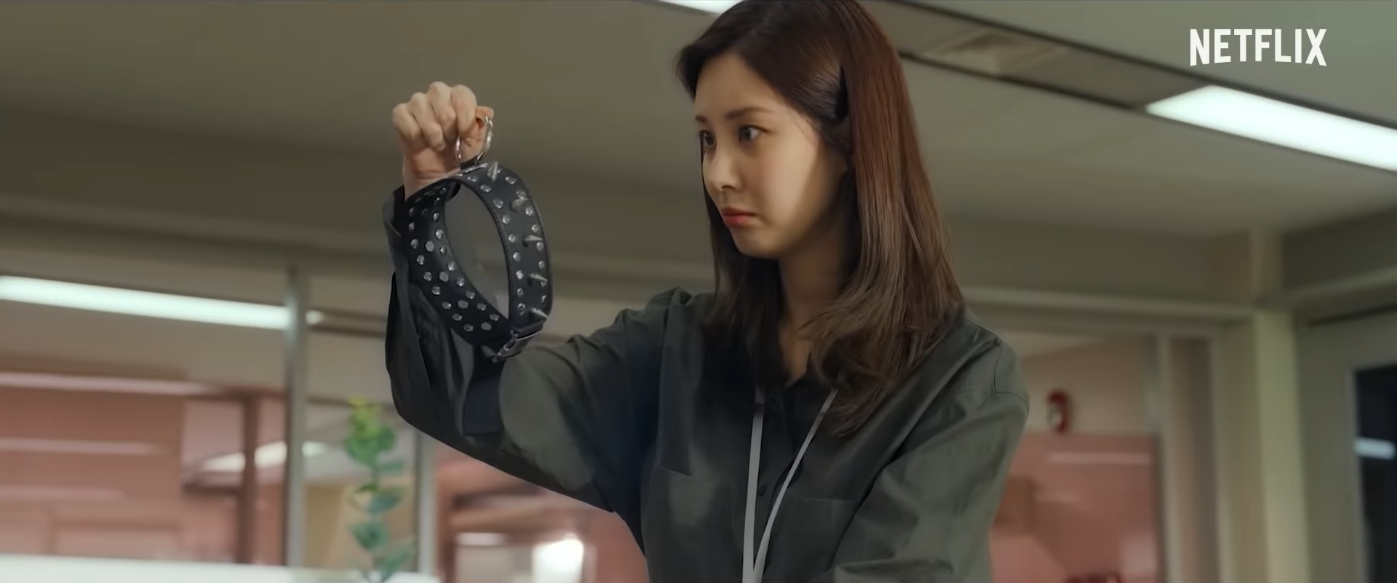
Because their names are so similar, Jiwoo accidentally picks up a personal package delivered for Jihoo, and finds a studded leather collar and leash with the nameplate “Miho”. Jihoo tries to cover for this, but she figures it out, and says nothing.
I discuss the BDSM-themed Korean romantic comedy Love and Leashes with my friend and colleague TammyJo Eckhart, a historian and author.
Currently on Netflix, Love and Leashes follows a submissive man and and a dominant woman as they learn about each other and deal with a prejudiced society. You can also read the English translation of the original webcomic.
Shooting of season 5 of Billions was interrupted by COVID, and the second half of the season didn’t air until 2021. Of the various plot threads picked up, the only one that concerns us is Chuck’s sex life. We last saw him involved with the sexually adventurous Cat, but as of S05E08 “Copenhagen”, it’s over.
Chuck: “I liked it. Of course I liked it. Give me pistachio ice cream, I’ll eat it and smile, as Diamond David Lee Roth would say. But it was uncomfortable. Just too many limbs. Too many questions. Oh, what to do? Give me rum raisin, on the other hand, I’ll inhale the whole point and root around the fridge to find another one. Then that’s what I was missing.”
Other guy: “Cat seems pretty liberated. Have you broached the subject of what you really want?”
Chuck: “As you said, she’s smart and she’s sensitive and she saw, she saw that it would never work, not all the for me, not without, you know… [clicks tongue] And so she said something along the lines of, ‘We’ll always have Paris.’ Only the words she used were harsher, and all about wasting her time.”
Earlier seasons of Billions made Chuck’s masochism a major part of both his personality and his relationship with Wendy. Now it’s been demoted to the same importance as his taste in ice cream. Apart from snide comments from other people, Chuck’s sex life doesn’t come up again.
Note that trailers for season 6 suggest that Chuck will continue to practice kink and he may even see Troy the pro-domme again.
Portia has departed, but she left a note for Frank instead of ghosting him. Rolph still hangs out with Pete, apparently as his “friend who knows your whole schedule” rather than his submissive. Pete has put Josh behind him, but is still uncertain about Tiff, and his career in comedy.
Tiff and Doug have reconciled. She says she loves him, and knew it was because she was vulnerable to him. She even offers to show him around the dungeon sometime.
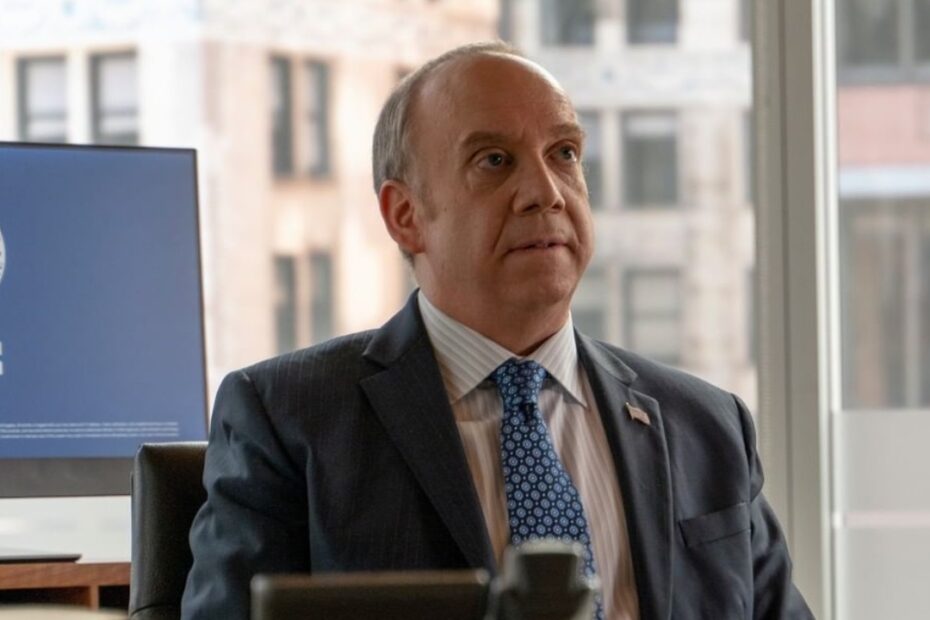
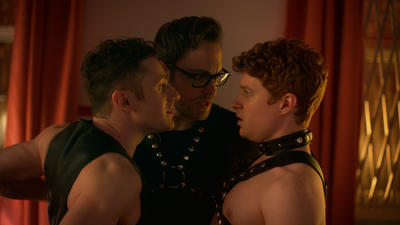
Josh’s coming-out to his father goes disastrously wrong, as his father, MJP, thinks this is actually about him being kinky, because that’s how he knows Pete.
MJP takes off his tie, undoes his shirt and reveals his padlocked collar.
MJP: “I’m kinky, Josh.[…] Kinky sub masochist, owned by my mistress, blissfully so. I’ve wanted to tell you for so long.”
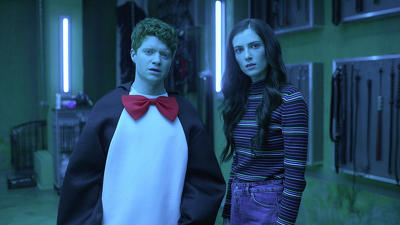
Penguin Guy returns. Pete, in his own penguin suit, puts his heart into his performance, waddling around the dungeon looking for his egg. There’s an improvisational give-and-take, as Penguin Guy finds Pete’s reference to global warming to be a “boner killer”, but Pete adjusts and carries on.
Tiff comes in (in regular clothes) and says using Mistress Mira’s dungeon isn’t allowed. Pete is being kind of a dick. Not only is he poaching clients from Tiff, he’s jeopardizing her future career as a domme by goofing off in class and using the dungeon to see clients without permission.
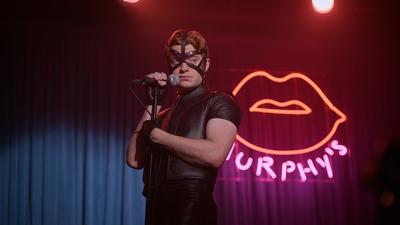
Pete is late to a training session at the dungeon, and is told that May said to start without him. He later takes out his frustrations in his stand-up, using kink as a gimmick. The club’s manager tells Pete about how she never mentions her wife in her stage performance; the importance of boundaries.
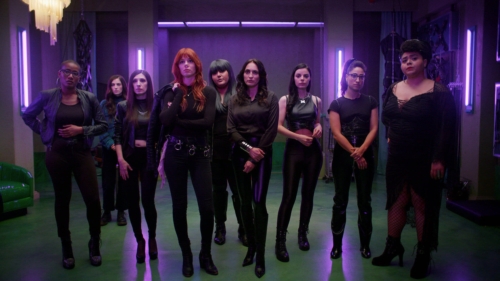
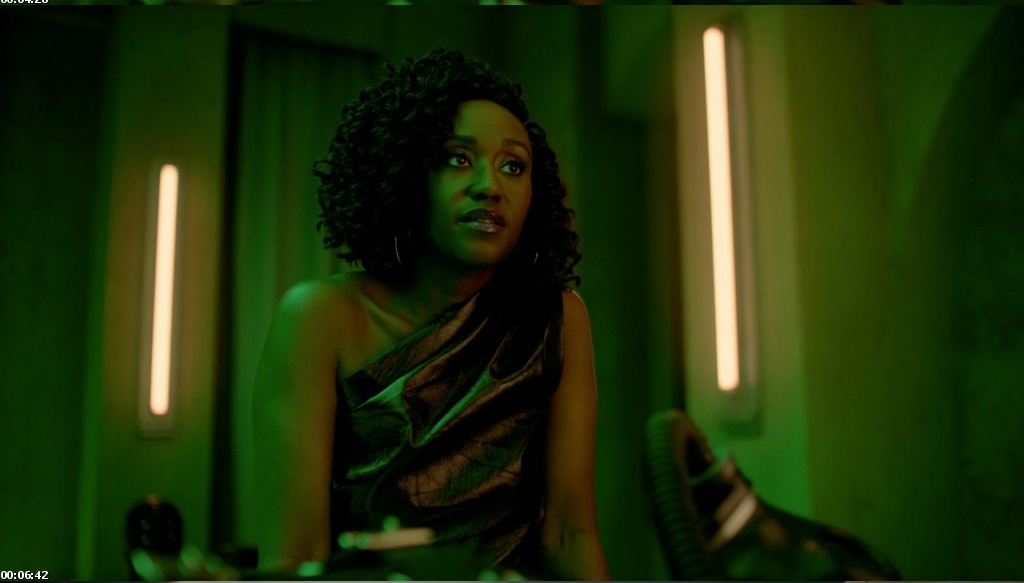
Inside, Mira and Tiff are having a scene with a man in a full-body bondage bag and a gas mask for breath control. In between letting him breathe, they talk about Tiff’s past and future in the pro-domme business.