Jul 102025
 

Pérez Seves, Richard. John Willie: The Story of John Alexander Scott Coutts. 2024 Amazon

Coutts in a relaxed moment.

The latest in Richard Pérez Seves’ series of biographies of kink figures in the 20th century documents the life of John Alexander Scott Coutts, better known as “John Willie”, the artist and publisher of Bizarre magazine. Along the way, the reader also meets Coutts’ freethinking model, muse and wife, Holly Faram; the “g string king”, Charles Guyette; National Police Gazette editor Edith Farrell; Harry Bodham-Wetham, AKA “Achilles”, high heeled shoe artisan; photographer and producer Leonard Burtman; and mysterious individuals known only by nicknames like “the Chicagoan” and “Little John” and “A Manhattanite”.

Coutts was a key node in a globe-spanning network of misfits, eccentrics and entrepreneurs. Born to a wealth English family, Coutts could have led a comfortable life, but instead walked away and ended up an itinerant labourer in Australia, then a merchant seaman. In the recorded interviews that are the foundation of this work, he described himself as unusual even from an early age, aware of his strong attraction to women in high heels. His interests brought him to the fetishistic letters in London Life magazine and then to a friendship with contributor “Achilles”, an alias he later used for himself. His dissatisfaction with the fetish content of London Life led him to create what would eventually be Bizarre (he admits he pirated fetish letters from the earlier magazine), but contingencies like WWII and his own difficulty in getting a steady income got in the way. He had to support himself as a seaman while he published the magazine and distributed it by hand on consignment. It was not the “get rich quick” scheme he had dreamed.

Holly Faram, Coutts’ wife, muse and model.

Coutts networked with people in the softcore magazine publishing space, including National Police Gazette editor Edith Farrell and girlie magazine publisher Max “Robert” Harrison, who bought Coutts’ Sweet Gwendoline damsel-in-distress comic strip and other works. Harrison put Coutts in touch with brother-sister duo Irving and Paula Klaw, who had been turned on to the market for new bondage/fetish media by the mysterious “Little John”. Coutts’ artistic perfectionism clashed with Klaw’s profit-driven style and fear of the authorities. The artist had to censor his own work, sometimes hand-painting underwear onto nudes, before the publisher would accept them.

Coutts also disliked Klaw’s business practices, such as not paying models and getting photographers to pay for access to the models and having to hand over their own work for Klaw to sell. Coutts, who prided himself on being a gentleman and a professional with his models, was the producer-practitioner of fetish media, on the border between producers like Klaw and Harrison and the numerous anonymous fans and practitioners. This business partnership did not last.

Bizarre was Coutts’ labour of love, which was both its saving grace and its greatest hindrance. As a one-man operation that was full of his meticulous artwork with realistic bondage, not to mention photography, it couldn’t hope to be published monthly, as promised. Instead of forgettable schlock, Bizarre was haphazardly published art. That’s why we remember Coutts and his work now.

There’s dark stuff in this story too: Coutts’ failed marriage with Faram, his struggles with alcoholism, and the tragic story of how one of his models, Judy Dull, was kidnapped and murdered by “the Glamour Girl killer”, Harvey Glatman.

After he gave up publishing Bizarre and mainly worked as a photographer in Los Angeles, Coutts was diagnosed with brain cancer. Radiotherapy gave him a brief extension, during which he agreed to be interviewed by Paul Gebhard of the Kinsey Institute. The transcript of that interview became the foundation of this work.

Pérez Seves’ book is a beautiful portrait of Coutts and his world, illuminating a history that so easily could have been forgotten. The reproductions of Coutts’ artwork and photography add to the value.

Editorial aside: I think the time is ripe for a John Willie biopic.

Apr 022025
 

Youtuber Matt Bernstein speaks with Moira Donegan and Adrian Daub (of the podcast In Bed With The Right) about “The Incoherent Sexual Politics of the Right”. The right wing/conservative resurgence we’ve seen over the past decade or so swings widely from the puritan to the libertarian in sexual matters. There’s a desperate scramble to seize the sexual high ground, to present themselves as the side of beauty and pleasure, and denigrate the sex of queer people and feminists as ugly and boring.

In particular, the conversation follows the trajectory of the “tradwife” image, epitomized by the “raw milkmaid dress”. They describe how the tradwife went from the epitome of conservative female modesty and domesticity to a sexualized fetish outfit over the span of only a year or two. Classically Abby, one of the best known advocates of tradwifism, shut down her Youtube channel late last year, because of the raunchy side of her supposed supporters.

There’s a long-standing precedent of female clothing that is supposed to de-sexualize the wearer becoming sexualized and fetishized; e.g. the French maid cliche. That a fetishized version of the tradwife image would appear so quickly is hardly surprising.

It represents the internal rift in the conservative movent, between the puritan and libertine wings. The image of the tradwife in Evie magazine, as modest yet seductive, sexually adventurous yet strictly hetero and monogamous, proved untenable. They couldn’t reconcile that dialectic.

Puritans and libertines have one thing in common: they both believe they should have control over other people’s bodies. In Margaret Atwood’s dystopian The Handmaid’s Tale, the patriarchal, theocratic fascists of Gilead subdivide women into specialized groups, each with their own sartorial code: handmaids in red for reproduction, wives in blue for running households, aunts in brown to manage handmaids, marthas in green for housework, and jezebels in fetish costumes from the old “decadent” days. They’re all different parts of the same system.

Mar 032025
 

Babygirl is a 2024 drama directed by Halina Reijn and starring Nicole Kidman, Harris Dickinson and Antonio Banderas.

Romy (Kidman) is a corporate executive in an automated shipping company. She’s also the mother of two teenage daughters, and wife to her stage director husband Jacob (Banderas). One montage shows that she subjects herself to exercise and cosmetic treatments, like botox.

Her backstory is that she was raised in hippie communes, but went into the corporate world, and brings her smartphone to bed with her. Much of her job appears to be performing prepared scripts for corporate videos, full of neoliberal buzzwords. She puts a human face on what is basically an inhuman process, represented by shots of blocky robots working in an automated warehouse.

The pressures of Romy’s seemingly ideal life leave her stretched thin. After faking an orgasm with her handsome and loving husband, she tiptoes to her home office, plays maledom/femsub porn on her laptop, and masturbates while covering her own mouth.

Continue reading »
Jan 012025
 

The sexual dynamics of the American conservative resurgence have been fascinating over the last few years.

Evie Magazine is a conservative women’s magazine first published in 2019. Its aesthetics and content reflect the “trad life/trad wife” movement, creating a pastoral fantasy of rural, agrarian labour combined with an idealized hetero-nuclear family. At the fringier end of things, Evie’s content splices into ideologies like pronatalism, anti-vaccination, the benefits of “raw milk” and other health quackery, transphobia, anti-feminism, COVID denial, QAnon, etc.

It’s epitomized by the “tradwife” image, a (white) long-haired woman in a white or print dress, hair kerchief, and cowboy boots who has had borne and raised several children while running a country farm and baking her own bread daily, and yet somehow still looks like a fashion model. She does no paid labour outside the home, instead leaving that to her commuting (white) husband.

Continue reading »
Nov 142024
 
Margaret Qualley as Rebecca and Christopher Abbott as Hal.

Sanctuary is a 2022 drama film directed by Zachary Wigon and written by Micah Bloomberg. IMDB Amazon

This essay contains spoilers.

Sanctuary resembles David Ives’ stage play Venus in Fur (film adaptation by Roman Polanski): it focuses on two people in a single location, and deals with the constantly shifting power relations between a man and a woman.

Hal (Christopher Abbot) is the heir of a hotel empire. He’s about to be appointed the CEO after the death of his father. In the luxury suite of one of the hotels, he meets with Rebecca (Margaret Qualley), who at first appears to be a lawyer who will interview him for the position. This escalates into a humiliation scene of Rebecca watching while Hal cleans the toilet in his underwear.

Continue reading »
Jun 292024
 
Ann and Allen

The Feeling That the Time for Doing Something Has Passed is a 2023 comedy-drama, directed and written by Joanna Arnow and starring Arnow, Scott Cohen and Babak Tafti. IMDB

Ann, a thirty-something woman in New York City, seeks relief from the difficulties with her job and family through submission to various men.

Continue reading »
Apr 112024
 

Mary Gaitskill’s short story “Secretary” (previously discussed) was first published in 1988, then was eventually adapted into the 2002 film Secretary. I’ve already discussed the differences between the script by Erin Cressida Wilson and the film directed by Steven Shainberg, so there’s a kind of family tree connecting the story and the movie.

Gaitskill herself has described the film as “the Pretty Woman version of my story.” (Gaitskill, Mary. “Victims and Losers: A Love Story; Thoughts on the Movie SecretarySomebody With a Little Hammer: Essays, Pantheon Books: New York, 2017) Last year, the New Yorker magazine published (March 27, 2023) Gaitskill’s follow-up story “Minority Report”. It tells the story of Debby and her life after her encounter with “the lawyer,” now given the name of Ned Johnson.

“Minority Report” is less a sequel than a retelling of the same event from Debby’s changed perspective as a woman in her 50s, and her difficulty in understanding and expressing her experience. The title explicitly comes from the Steven Spielberg film of the same name, in which precognitive people experience flashes of future events while kept in a sedated state, and a team of detectives have to interpret these scattered, impressionistic glimpses of possible crimes and decide what to do.

Continue reading »
Mar 142022
 

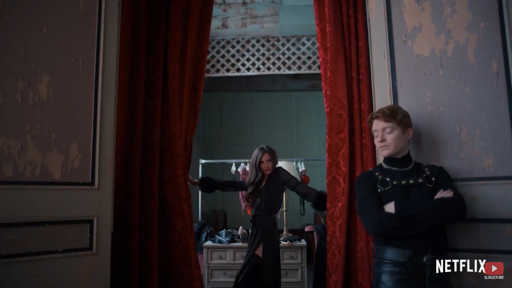
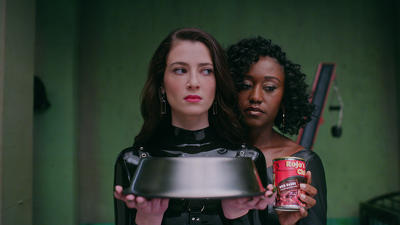
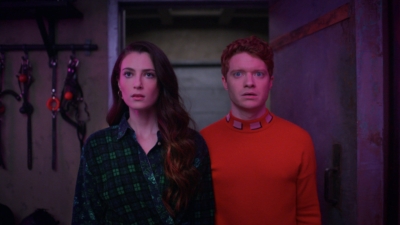
Love and Leashes is a 2022 Korean romantic comedy, currently streaming on Netflix, about two office workers who begin a dominant/submissive relationship, based on a webcomic.

Note: I do not speak Korean, and I’m going entirely by the dubbing and subtitles. There are likely many cultural and linguistic nuances I am missing. E.g. “Master” is frequently used, but not “Mistress”. 

Jung Jihoo transfers to the public relations department of a corporation, where he meets a woman with a nearly identical name, Jung Jiwoo. She’s highly intelligent and competent, but ignored or belittled by the department’s sexist boss. Jihoo is actually her superior in the hierarchy, but he tries to listen to her and compromise. 

Jiwoo is attracted to Jihoo, but is reluctant to act on it. Her mother and friend both urge her to act on it, but in a stereotypically “feminine” way, which is at odds with her direct personality. 

Because their names are so similar, Jiwoo accidentally picks up a personal package delivered for Jihoo, and finds a studded leather collar and leash with the nameplate “Miho”. Jihoo tries to cover for this, but she figures it out, and says nothing. 

Continue reading »
Mar 092022
 

I discuss the BDSM-themed Korean romantic comedy Love and Leashes with my friend and colleague TammyJo Eckhart, a historian and author.

Currently on Netflix, Love and Leashes follows a submissive man and and a dominant woman as they learn about each other and deal with a prejudiced society. You can also read the English translation of the original webcomic.