Garrett, Jane. 2024 John Willie: A Bizarre Life. Schiffer Amazon
Jane Garrett has written another biography of mid-century kink artist, photographer and publisher John “Willie” Coutts, best known for Bizarre magazine.
Continue reading »
Garrett, Jane. 2024 John Willie: A Bizarre Life. Schiffer Amazon
Jane Garrett has written another biography of mid-century kink artist, photographer and publisher John “Willie” Coutts, best known for Bizarre magazine.
Continue reading »
Pérez Seves, Richard. John Willie: The Story of John Alexander Scott Coutts. 2024 Amazon

The latest in Richard Pérez Seves’ series of biographies of kink figures in the 20th century documents the life of John Alexander Scott Coutts, better known as “John Willie”, the artist and publisher of Bizarre magazine. Along the way, the reader also meets Coutts’ freethinking model, muse and wife, Holly Faram; the “g string king”, Charles Guyette; National Police Gazette editor Edith Farrell; Harry Bodham-Wetham, AKA “Achilles”, high heeled shoe artisan; photographer and producer Leonard Burtman; and mysterious individuals known only by nicknames like “the Chicagoan” and “Little John” and “A Manhattanite”.
Coutts was a key node in a globe-spanning network of misfits, eccentrics and entrepreneurs. Born to a wealth English family, Coutts could have led a comfortable life, but instead walked away and ended up an itinerant labourer in Australia, then a merchant seaman. In the recorded interviews that are the foundation of this work, he described himself as unusual even from an early age, aware of his strong attraction to women in high heels. His interests brought him to the fetishistic letters in London Life magazine and then to a friendship with contributor “Achilles”, an alias he later used for himself. His dissatisfaction with the fetish content of London Life led him to create what would eventually be Bizarre (he admits he pirated fetish letters from the earlier magazine), but contingencies like WWII and his own difficulty in getting a steady income got in the way. He had to support himself as a seaman while he published the magazine and distributed it by hand on consignment. It was not the “get rich quick” scheme he had dreamed.

Coutts networked with people in the softcore magazine publishing space, including National Police Gazette editor Edith Farrell and girlie magazine publisher Max “Robert” Harrison, who bought Coutts’ Sweet Gwendoline damsel-in-distress comic strip and other works. Harrison put Coutts in touch with brother-sister duo Irving and Paula Klaw, who had been turned on to the market for new bondage/fetish media by the mysterious “Little John”. Coutts’ artistic perfectionism clashed with Klaw’s profit-driven style and fear of the authorities. The artist had to censor his own work, sometimes hand-painting underwear onto nudes, before the publisher would accept them.
Coutts also disliked Klaw’s business practices, such as not paying models and getting photographers to pay for access to the models and having to hand over their own work for Klaw to sell. Coutts, who prided himself on being a gentleman and a professional with his models, was the producer-practitioner of fetish media, on the border between producers like Klaw and Harrison and the numerous anonymous fans and practitioners. This business partnership did not last.
Bizarre was Coutts’ labour of love, which was both its saving grace and its greatest hindrance. As a one-man operation that was full of his meticulous artwork with realistic bondage, not to mention photography, it couldn’t hope to be published monthly, as promised. Instead of forgettable schlock, Bizarre was haphazardly published art. That’s why we remember Coutts and his work now.
There’s dark stuff in this story too: Coutts’ failed marriage with Faram, his struggles with alcoholism, and the tragic story of how one of his models, Judy Dull, was kidnapped and murdered by “the Glamour Girl killer”, Harvey Glatman.
After he gave up publishing Bizarre and mainly worked as a photographer in Los Angeles, Coutts was diagnosed with brain cancer. Radiotherapy gave him a brief extension, during which he agreed to be interviewed by Paul Gebhard of the Kinsey Institute. The transcript of that interview became the foundation of this work.
Pérez Seves’ book is a beautiful portrait of Coutts and his world, illuminating a history that so easily could have been forgotten. The reproductions of Coutts’ artwork and photography add to the value.
Editorial aside: I think the time is ripe for a John Willie biopic.
Stein, Stephen K. 2021. Sadomasochism and the BDSM community in the United States: kinky people unite. New York : Routledge, Taylor & Francis Group
Stein’s first chapter, which attempts to describe the proto-BDSM culture of the early and mid twentieth century, is a necessarily scattershot collection of data points. Research any historical field long enough and the gaps in the record become clear. We know so little about the sadomasochistic subculture prior to the 1970s. There’s some data about the gay subset, precious little about straights, and practically nothing about lesbians. Stein had access to the Kinsey Institute, the Carter Johnson Leather Library, the NLA Archives and more, and even then he couldn’t shed any new light on American BDSM before 1970.
Stein treats the BDSM culture as a whole, whereas I think it is more accurate to describe it as three parallel but separate streams (gay, lesbian, and straight), each with their own economy, and culture, that occasionally influence each other.
Continue reading »GENE BILBREW REVEALED: The Unsung Legacy of a Fetish Art Pioneer (African American Artists Series) is the latest in Richard Pérez Seves’ series of biographies of fetish artists and publishers.
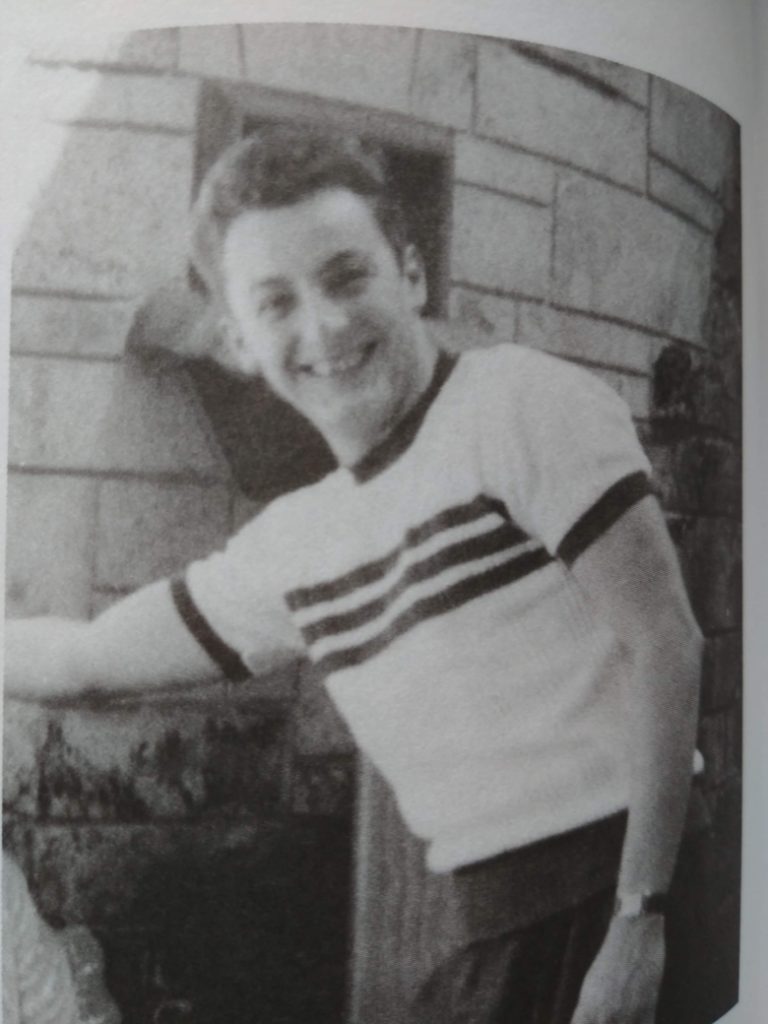
Pérez Seves’ previous work on Eric Stanton gave an interesting picture of a man, his work and his time. However, the author has less to work with when it comes to Gene Bilbrew.
Continue reading »Richard Pérez Seves has written a thorough and visually engrossing study of fetish artist Eric Stanton and the world he lived in. Stanton was one of the major artists to define the post-WWII American style of fetish and BDSM art, when this genre was very much underground. Seves managed to get access to impressive quantities of ephemera of the artist’s life and interviews with his friends and families.

Lindemann, Danielle J. 2012. Dominatrix: gender, eroticism, and control in the dungeon. Chicago ; London : The University of Chicago Press, 2012.
“Professional dominatrix” is an archetype that attracts attention out of proportion to the number of people who actually fit that description. For many, they are the symbol of BDSM in general, a representation of the perversity of men, simultaneously attractive and absurd. Are they trickster courtesans manipulating men via their weaknesses, or just another type of sex worker?

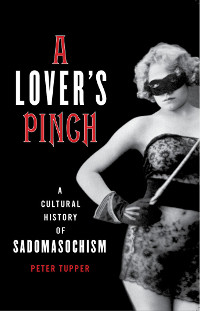
The blog Of Love and Sex has reviewed A Lover’s Pinch.
A Lover’s Pinch is a deep dive that goes far beyond Leopold von Sacher-Masoch the Marquis de Sade. Admittedly, I wasn’t expected to read analyses of how religion, war, and slavery impacted our sexualities (and relevant imagery is included on some pages), but the author of this book is not afraid to broach those subjects.
I wouldn’t say that tricky subjects aren’t handled with care within these pages or that it’s un-PC, but the tone is sometimes decidedly frank. If you’re especially religious or still experience trauma from war or slavery, then A Lover’s Pinch might not be a book you wish to pick up (or you may wish to skip those specific chapters).

My apologies for addressing the film adaptation of Fifty Shades of Grey so late. I obtained one copy of the film through admittedly dubious means (let’s just say the text messages are in Spanish), and another in which the subtitles were in originally in, I think, Thai, then covered up by another layer of subtitles in Spanish, and all the explicit sex was cut.
Beyond all that, I could only watch about five minutes at a time. Somebody asked me how I got through the film and I joked, “I kept a fifth of Scotch handy.”
Jane’s Guide has a great review of this blog, calling it “absolutely fascinating”.
Thanks to JK Blackmore for the link!